
We live in a world that celebrates the grind culture, not self-care. There is a lot of shame and guilt surrounding prioritizing self-care. Women in particular have been groomed to be of service to everyone else. If we are not taking care of someone or something else, we are considered lazy, selfish, entitled. Societal shame is a potent deterrent. Saying yes to ourselves and our legitimate needs must mean saying no to someone else. And we all know good girls don’t say no.
Our collective addiction to busyness is also an obstacle to self-care. If we have to choose to get something done vs. taking care of ourselves, we will likely always choose doing over being. Busyness is elevated beyond reflection and rest.
It is time for us to break this cycle of self-neglect and reclaim our birthright of wellbeing.
Let’s learn how to prioritize self-care today
If you want to learn how to prioritize self-care and let go of the guilt, we’ve got you!
Continue reading to learn:
- What is self-care?
- Simple yet transformative self-care strategies you can implement today
- How to start saying yes to yourself
What Is Self-Care
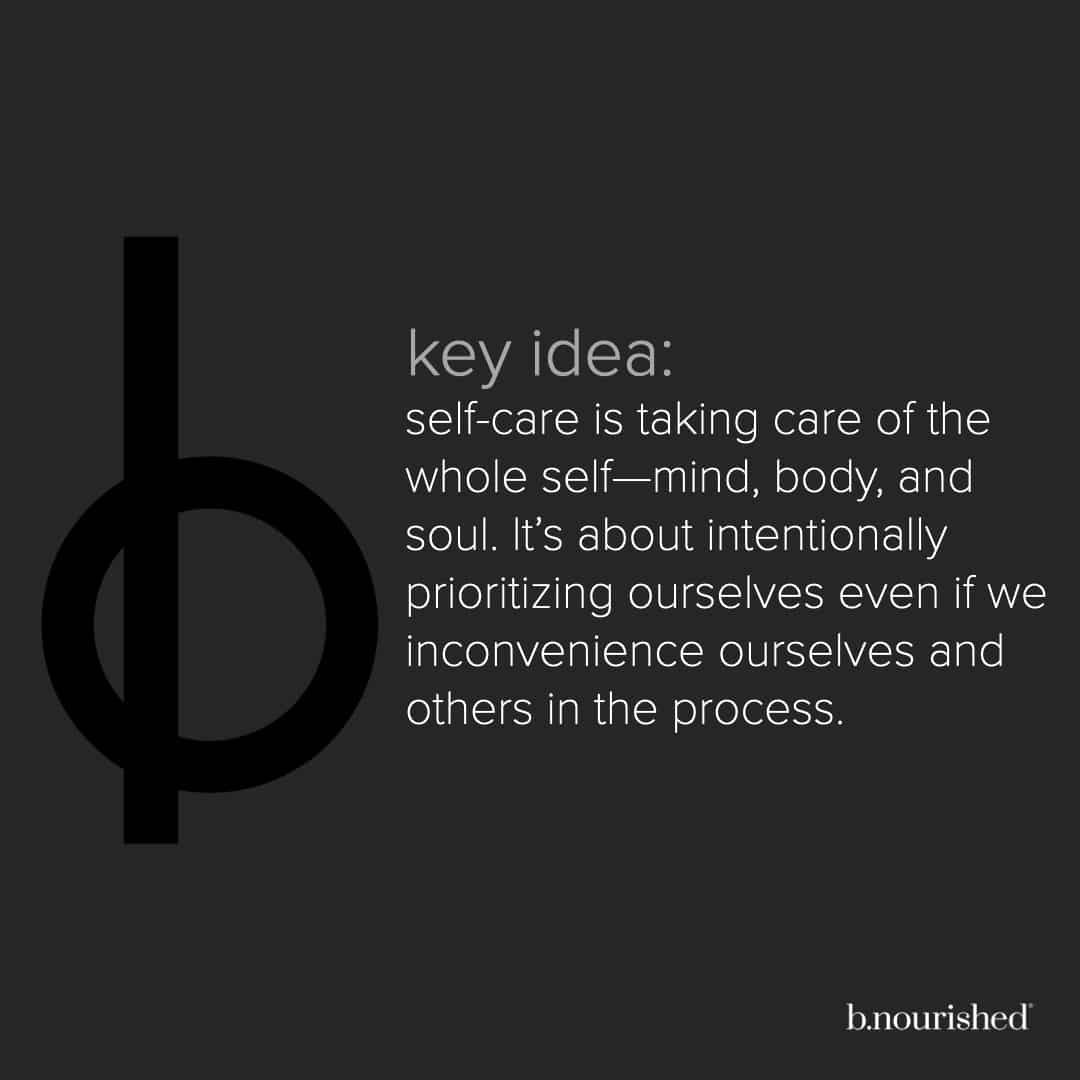
What is self-care? Is it just bubble baths and going for a walk? Sometimes it is but it is so much more. Self-care is taking care of the whole self—mind, body, and soul. It’s about intentionally prioritizing ourselves even if we inconvenience ourselves and others in the process.
Self-care is parenting ourselves to do the basics like sleep, eat veggies, rest, exercise and to do the hard things, the things we sometimes don’t want to do in the moment but do in support of our future selves. Our future selves suffer the headache from the second glass of wine. Our future selves lose the sale because of a bad night’s sleep. Shouldn’t Sunday morning us have some say on what Saturday night us does?
Self-care requires we craft a plan for the day that honors our priorities and wellbeing, not just react to what is in front of us. It is irresponsible and inauthentic to give to others when we have little left for ourselves. When we over-function for everyone else and underperform for ourselves we are forgetting to prioritize self-care and even our generosity suffers when given in resentment.
What self-care strategies can you implement today?
If it’s not about bubble baths and bonbons, what is it? Self-care strategies are really about doing what you need to do to be well even when the motivation has faded. If you are wondering how to prioritize self-care, here are some very basics to get you started. There is nothing new here. We know what we need to do and yet don’t do it. We tend to dismiss what is simple and in doing so, underestimate its power to transform us. So hold yourself accountable to one action from below:
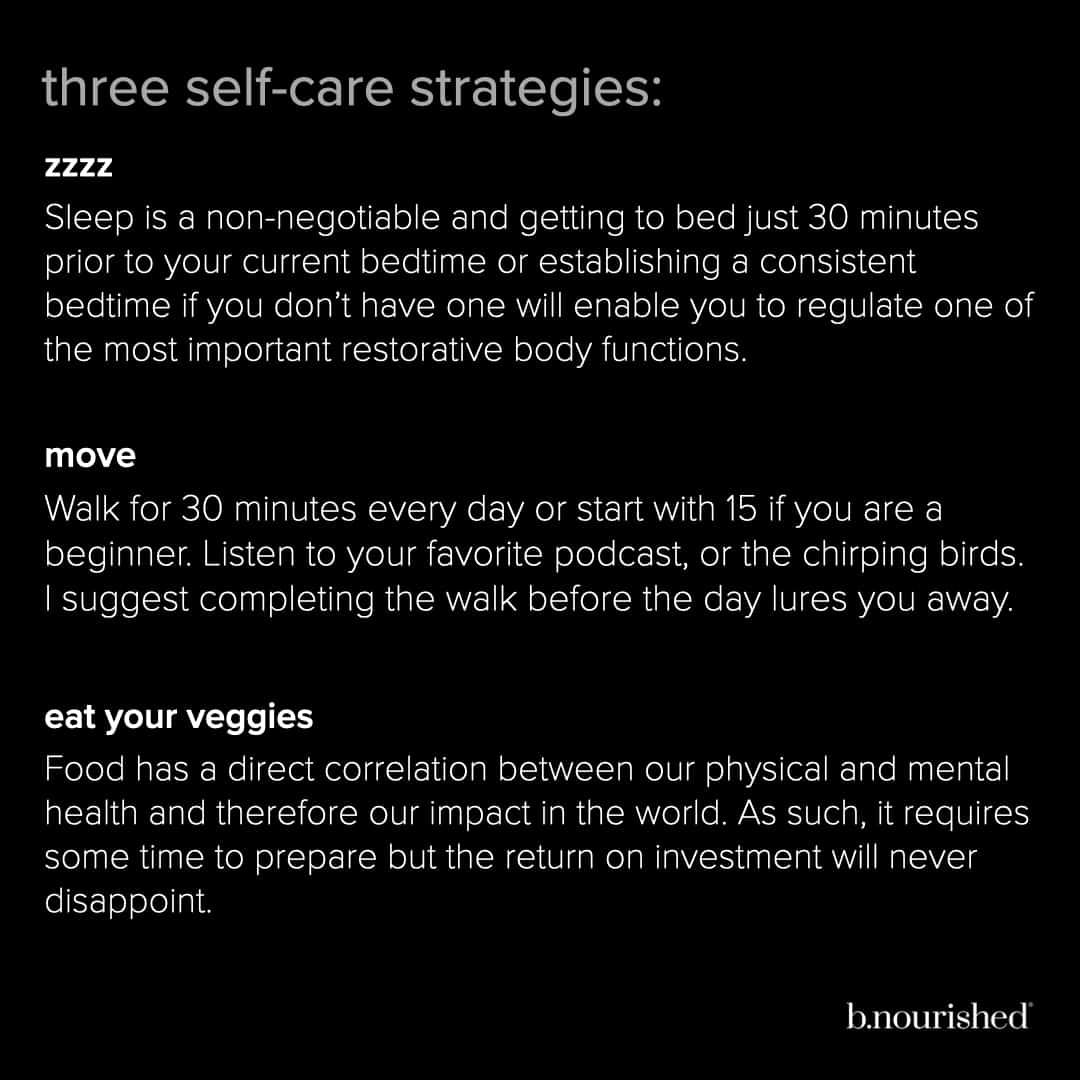
- ZZZZ. Sleep is when your body is doing a lot of repairs, reorganizing, and integrating. I’m completely useless when I don’t get enough sleep and I am guessing it is the same for you. It’s more challenging to cope with emotions, navigate small obstacles throughout the day, or even find motivation for the things that matter. Sleep is a non-negotiable and getting to bed just 30 minutes prior to your current bedtime or establishing a consistent bedtime if you don’t have one will enable you to regulate one of the most important restorative body functions.
- Move. Breathing, stretching, and moving are integral to a healthy body and mind. Our bodies are masterful machines and like all machines, require regular maintenance. Walk for 30 minutes every day or start with 15 if you are a beginner. Listen to your favorite podcast or the chirping birds. I suggest completing the walk before the day lures you away. This ritual also enables you to take the elevator down from your head and inhabit your body which so few of us do in our cerebral world.
- Eat your veggies. Make them the center of your plate. If we could just forgo the manic fear of not getting enough protein and instead increase our leafy green consumption, we would achieve a higher level of health. Add lefty greens to every meal. Keep it simple. The less we do to a food, the more it does for us. Add colorful foods like red grapes, kiwi, kale, eggplant, red peppers, carrots, rainbow chard, and more for a vibrant life. Food has a direct correlation between our physical and mental health and therefore our impact in the world. As such, it requires some time to prepare but the return on investment will never disappoint.
- Drink water. Again, this one is quite obvious but are you doing it? Your body is made up of a lot of water. It’s essential that you drink enough water in a day to replenish what is naturally lost through sweat and other body systems. In general, we are a pretty dehydrated population. Dehydration can cause headaches, lethargy, constipation, irritability, issues with kidney function, and on and on and on. Fill a water bottle and wrap 3 rubber bands around it. Slide the rubber band down each time you drain the entire bottle, then refill until all 3 are done. Don’t worry. Your body will adjust to the increased water consumption soon you won’t be peeing every 10 minutes
If you want to know how to prioritize self-care, these are some actionable steps that you can implement right this very minute. Commit to an earlier bedtime, fill up a water bottle, go for a walk or roll out your yoga mat. Resist the urge to dismiss these simple tactics because when done consistently, they can transform your life in powerful, lasting ways.
How to prioritize self-care and let go of the guilt
But what about the guilt? All of those things are fine and dandy, but what if it means saying no to the people you love? What if it means saying no to helping someone move, or leaving your partner at home with the kids when you haven’t seen them very much or choosing to sleep instead of staying up late and watching your favorite show? Prioritizing self-care means something has to give and it does not have to be you every time. Consistently cover the basics and you will have more resources to share with the world.
Learning how to prioritize self-care means using guilt as a tool.
When guilt comes up, just take a deep breath and look within. Self-care demands self-awareness. Look within, and acknowledge that when you’re feeling guilty for prioritizing yourself, you are making tremendous progress. You are stretching beyond the familiar and embracing new habits to reclaim your birthright of self-care. Lean into guilt as a teacher and a healthy indication of growth. Discomfort equals growth. Don’t run away from it.
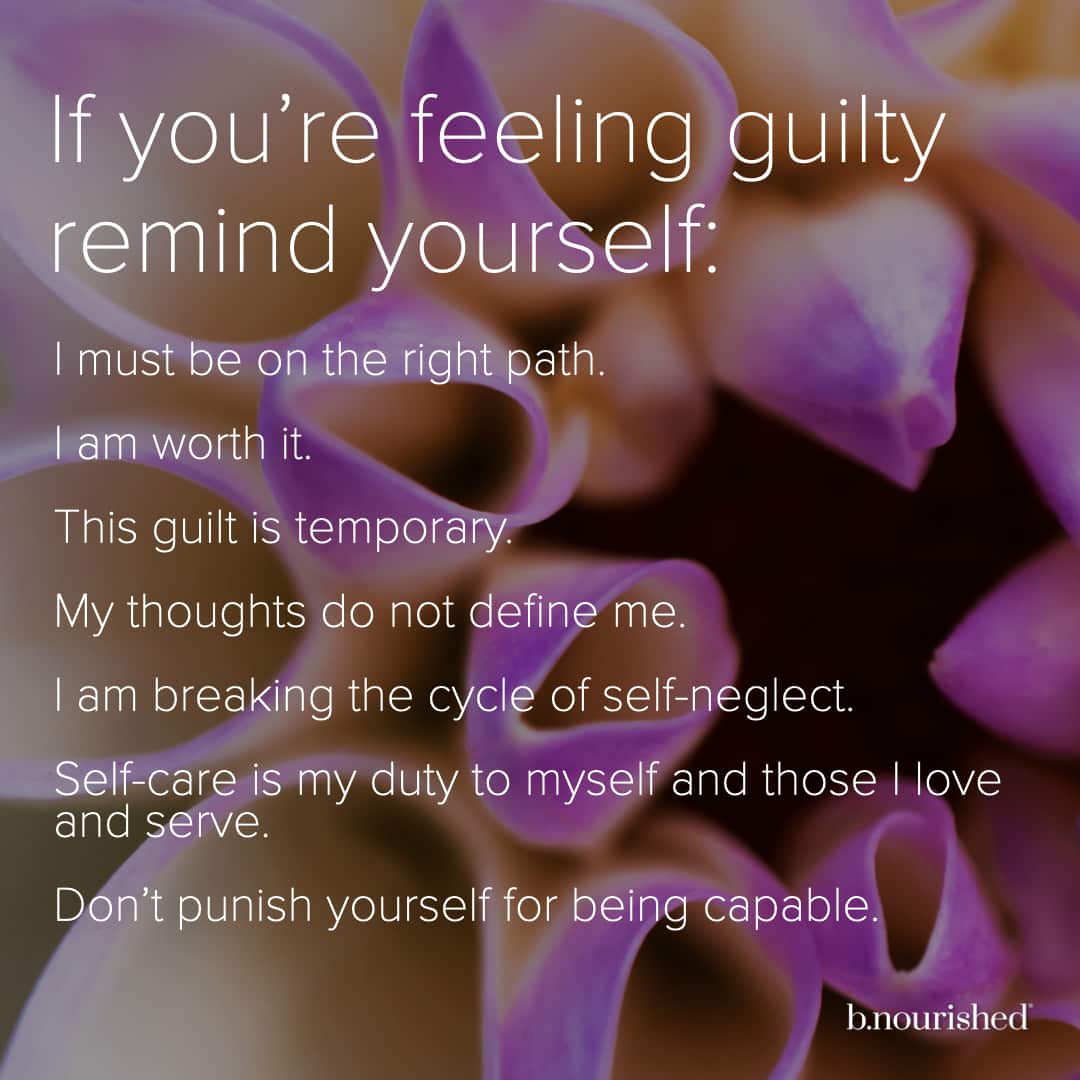
Remind yourself:
- I must be on the right path.
- I am worth it.
- This guilt is temporary.
- My thoughts do not define me.
- I am breaking the cycle of self-neglect.
- Self-care is my duty to myself and those I love and serve.
The more you practice self-care, the easier it gets. Yes, feelings of guilt and shame will likely creep in. Recognize them, welcome them and reframe them as evidence of how far you’ve come.
Try it. What’s a thought that comes up when you want to do something for yourself, especially when doing something for yourself might mean not doing something for other people or dipping into money when it’s already a little tight?
What comes up for you?
You can write it down if you’d like. Now reframe it into a positive, even if you don’t believe it… yet.
If you wrote down: I’m not worth it. Reframe it into: I am worth it. The more I give to myself, the more I can give to others.
If you wrote down: I don’t have time. Reframe it into: I have time. I always have time. And I will choose to prioritize myself within the time allotted to me.
It’s not easy, but when the guilt starts to rear its ugly head, remember that it likely means you are on the right path. See it as a helpful hint that you are breaking old patterns.
Breaking The Cycle Of Self-Care Shame
Now more than ever, we need to rise and make self-care a priority. We need to flip “selfishness” on its head and reframe what it means to be selfish. Selfish can be good. Selfish can mean you’re setting healthy boundaries. Selfish can mean self-worth and self-confidence, and self-awareness for what it means to take care of yourself so that you can take care of others.
So I challenge you: Take off the superhero capes. Hang it up or send it to the dry cleaners. And nourish yourself by implementing self-care strategies that restore you to full power. Only then can you pick up that cape and tie it on with the confidence that you won’t be the one in need of rescue. To give is only valuable if you can give sustainably, without risking burnout and raging resentment.
Sustainable self-care allows you to:
- Generate more energy to do what only you can do.
- Create financial abundance so that you have choices and can donate where you want to.
- Approach challenges with more mental clarity at a time when the world requires us to be at our best.
Self-neglect communicates that you are not enough or maybe too much and that your needs are not legitimate. Viewing self-care as a guilty pleasure doesn’t honor the value and gifts you have to offer the world because you need self-care to achieve your goals. If you want to bring about positive change in the world, let that change start with you. Vow now to show up for yourself at least the way you show up for others.
Deep down you know how to take care of yourself. Nurture yourself with a cup of your favorite tea and a moment of quiet. Feed your body nutritious foods, water, movement, and enough sleep. Set healthy boundaries. Advocate for yourself. And as you keep saying yes to you, you’ll notice that you can more sustainably say yes to others.